
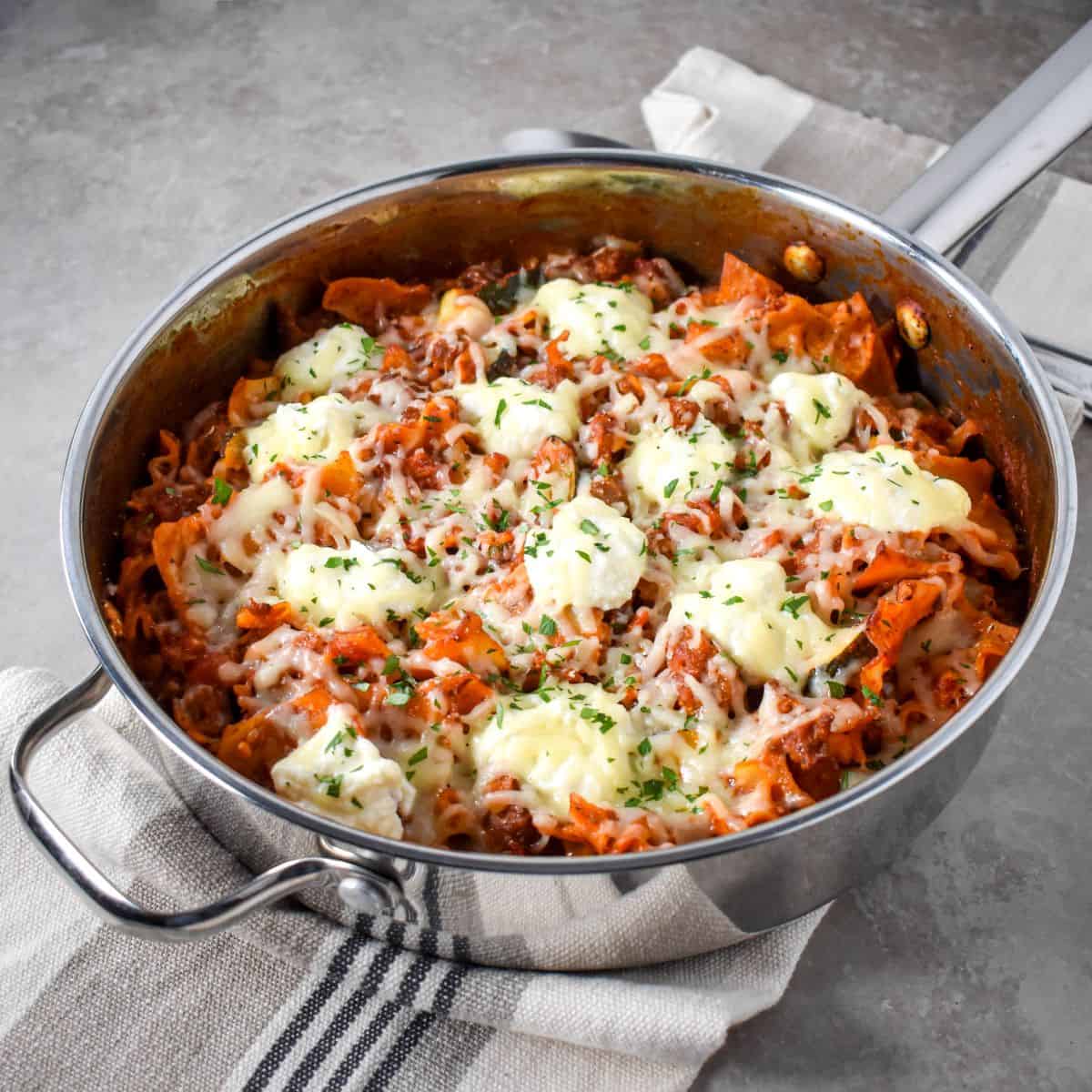
Skillet lasagna is a great weeknight shortcut for when you're craving homemade lasagna. Everything cooks right in one pan, from the browned sausage to the sauce and noodles, all finished under a layer of melty cheese. We also sneak in some zucchini for extra texture.
Ingredients you'll need
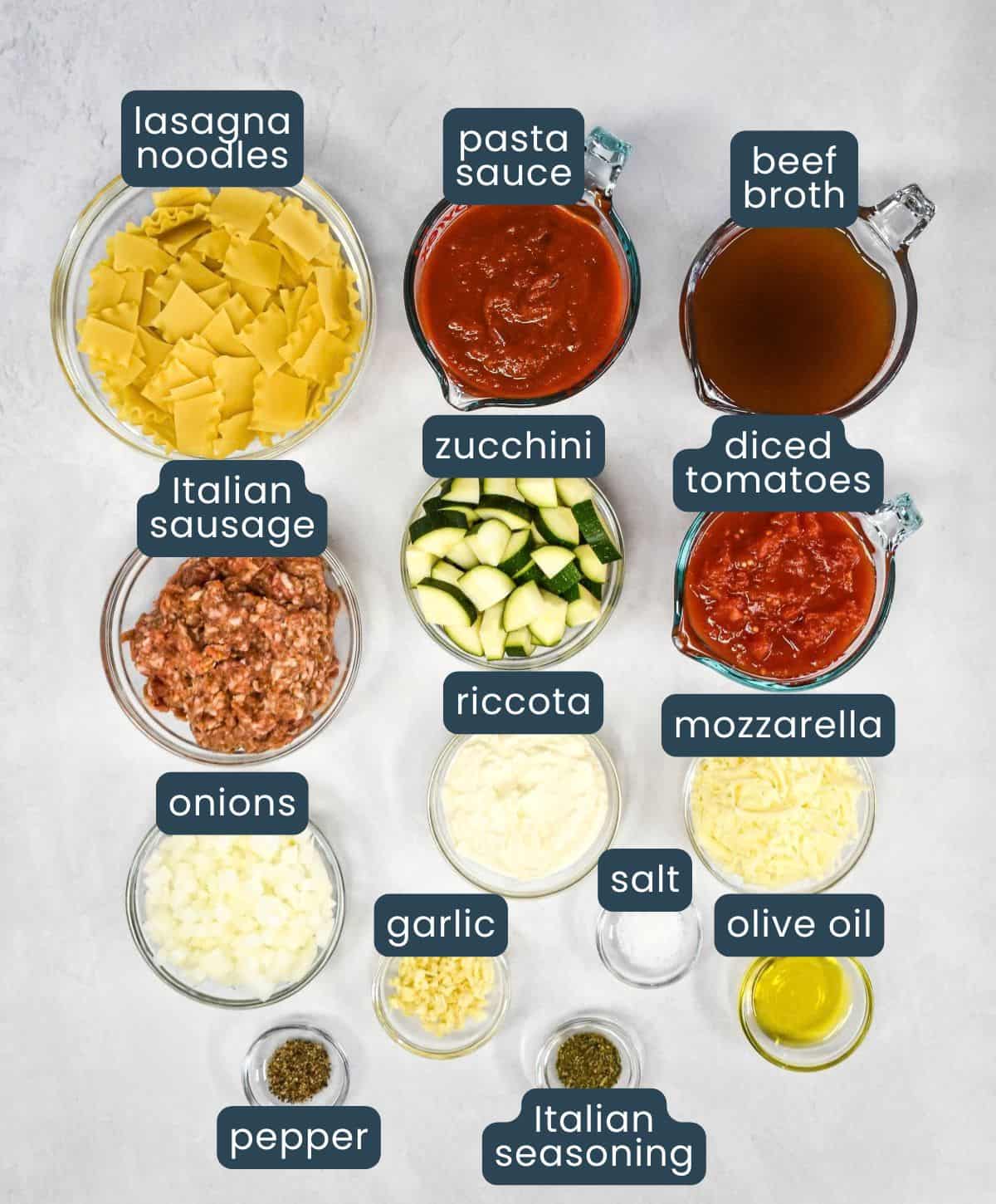
Oil/fat - Olive oil helps brown the sausage and gets everything started. Use your favorite oil as long as it's suitable for sautéing.
Sausage - Italian sausage adds lots of flavor to this dish. Use mild, hot, or sweet; turkey sausage works too. If using links, remove the casings and break them up before cooking.
Produce - Onion and garlic build the base, and zucchini sneaks in some veg and adds texture.
Seasoning - Italian seasoning and black pepper keep it simple. Salt may be needed for the sauce.
Pantry - Jarred pasta sauce and canned diced tomatoes make the sauce quick and easy. Beef broth loosens the sauce to cook the noodles (have a little extra on hand in case it's needed). Regular lasagna noodles (not no-boil) get broken into pieces so they cook right in the skillet.
Cheese - Mozzarella and ricotta get added at the end for that classic lasagna feel.
Optional garnish - Fresh parsley or basil, red pepper flakes, and grated Parmesan for serving.
📖 See the recipe card for quantities and preparation.
How to make skillet lasagna
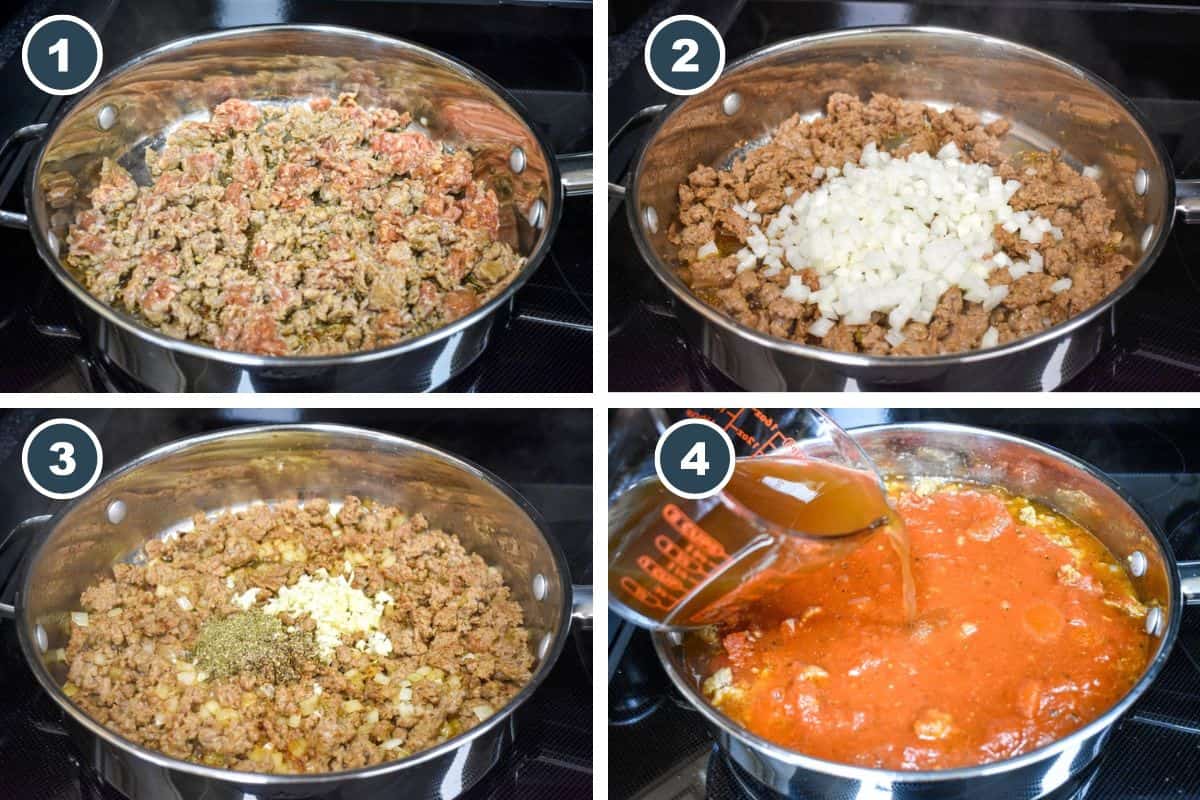
- Heat olive oil in a large deep skillet or shallow Dutch oven over medium heat. Add sausage and cook 3-5 minutes, stirring and breaking it up, until browned.
- Add onion and cook for 2 minutes, stirring often.
- Add garlic, Italian seasoning, and black pepper. Cook for 1 minute while stirring.
- Stir in pasta sauce, undrained diced tomatoes, and beef broth. Bring to a gentle simmer, then lower heat to medium-low, cover, and simmer 5-7 minutes, stirring occasionally.
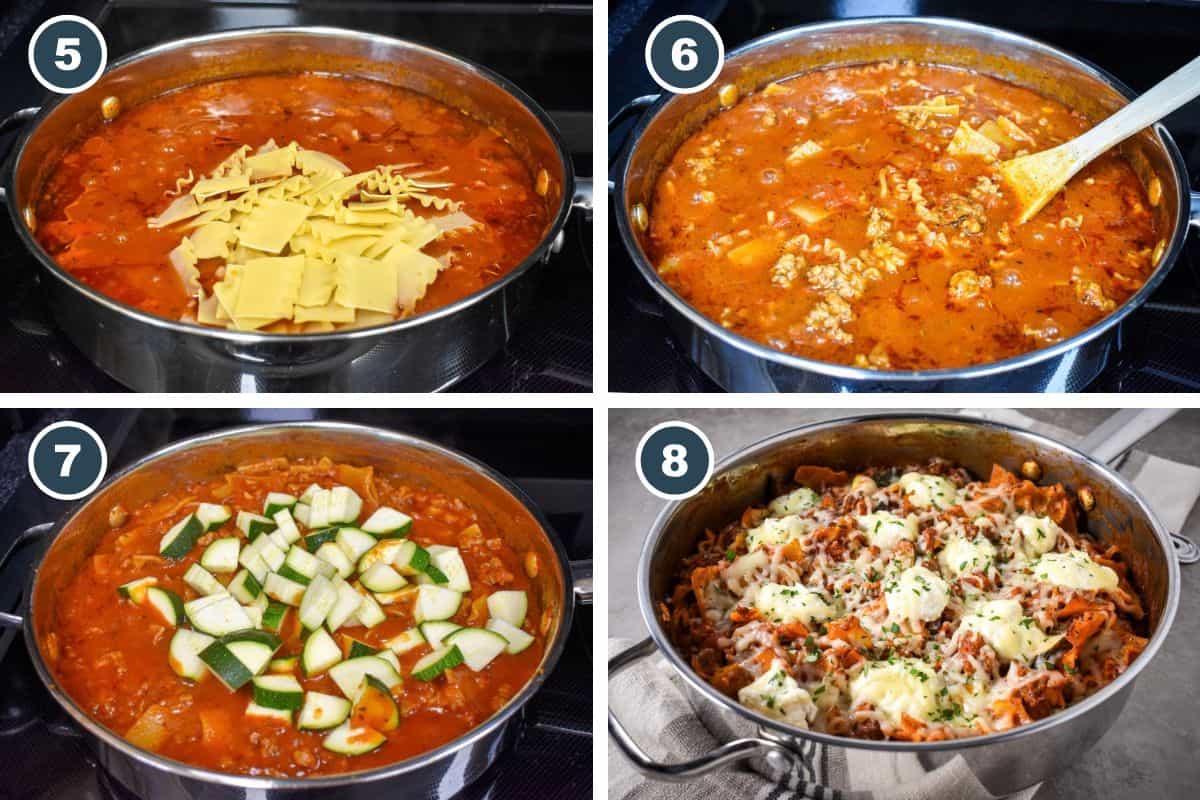
- Add broken lasagna noodles. Stir to coat, then press noodles down so they're mostly submerged.
- Return to a gentle simmer. Cover and cook 18-23 minutes over medium-low, stirring often so noodles cook evenly and do not stick. Add a splash more broth as needed if the sauce tightens up too early.
- Stir in zucchini. Cover and cook 5-10 minutes, or until zucchini is as tender as you like. If the sauce is too thin, uncover and simmer for a few minutes to thicken. Taste and add salt if needed.
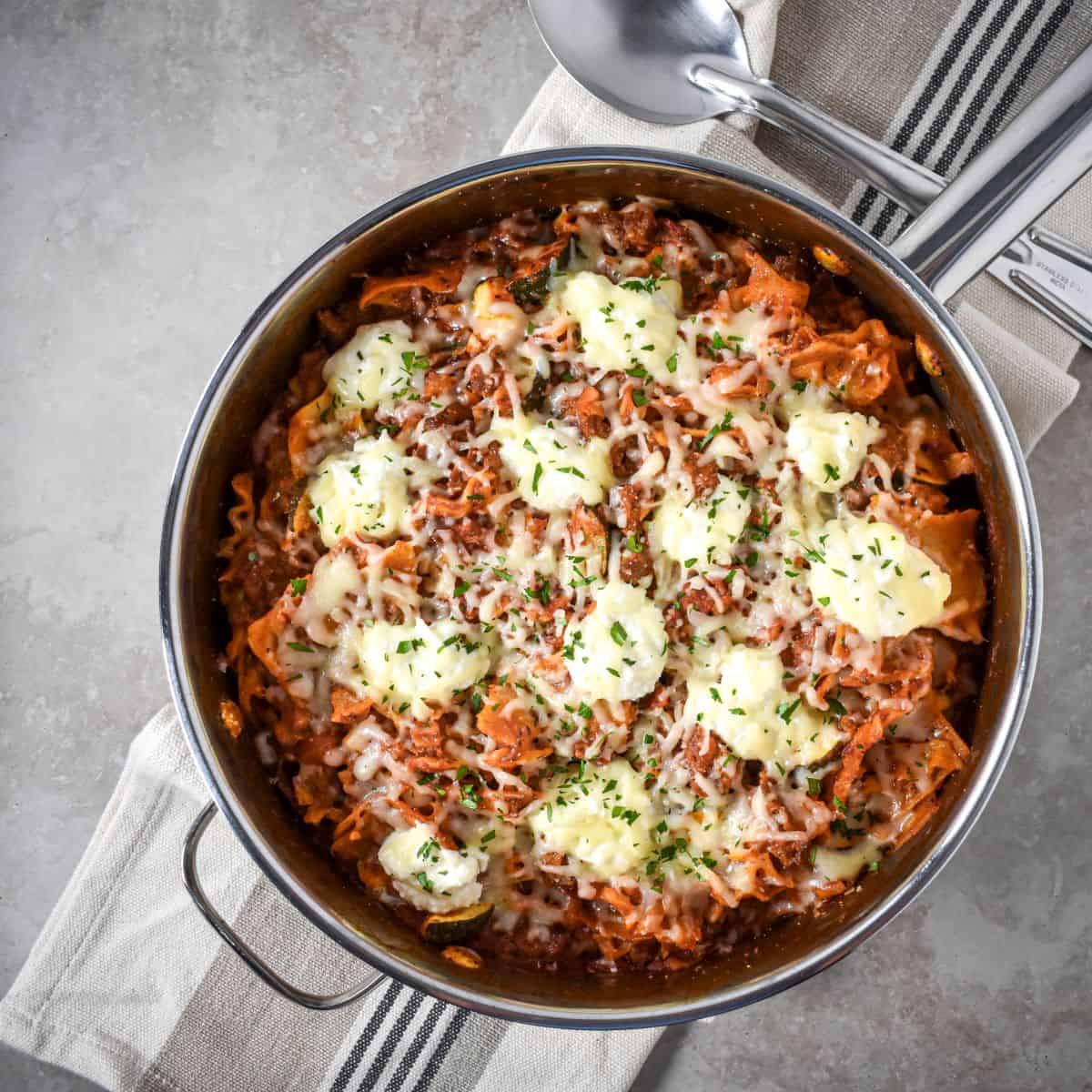
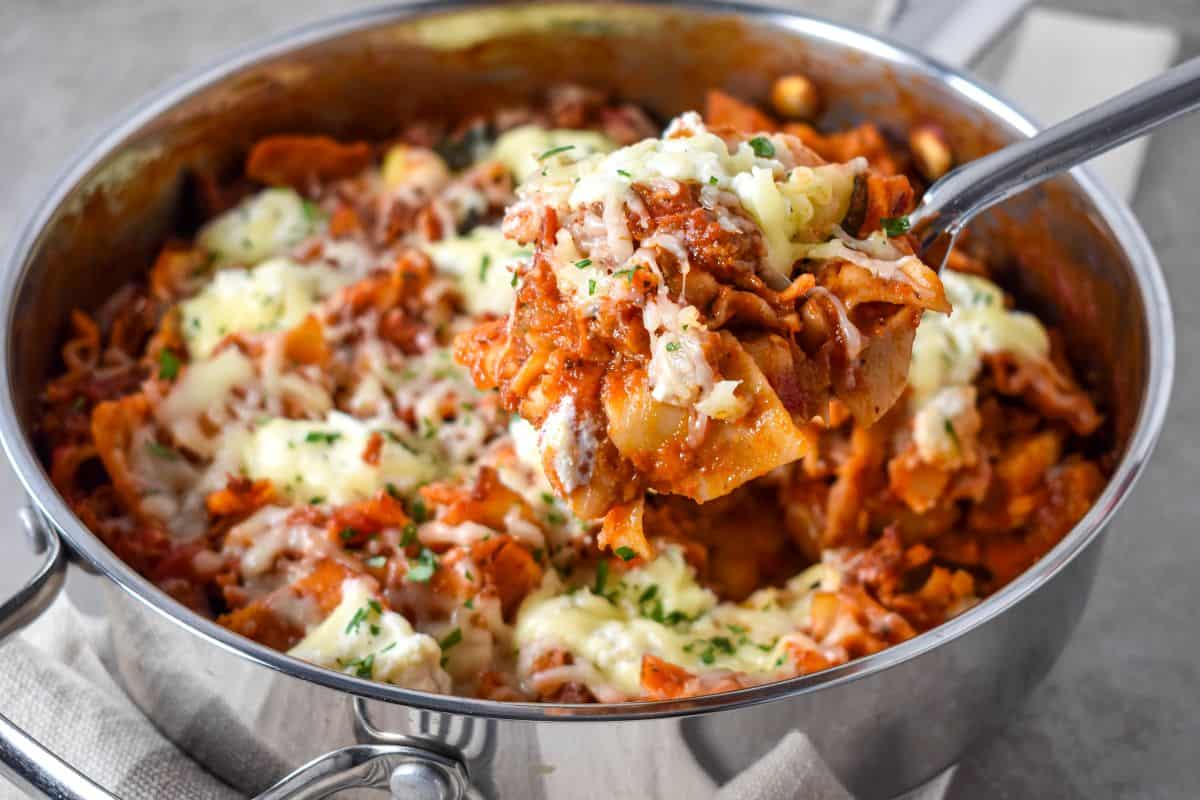
- Dot with ricotta and sprinkle with mozzarella. Cover, reduce heat to low, and let sit 3-6 minutes, or until melted. Garnish with herbs and serve with Parmesan and red pepper flakes, if desired.
Recipe tips and notes
Keep the heat at a gentle simmer and stir often once the noodles go in. This is what keeps them separated, prevents sticking, and helps them cook evenly. If the sauce tightens up too early, stir in a little more broth and keep going with the recipe. You'll know it's too tight if you feel resistance when stirring. That's fine at the end when the noodles are done, but not in the middle of cooking.
Storing and reheating instructions
Refrigerator: Let the pasta cool, then transfer leftovers to an airtight container and refrigerate for 3 to 4 days.
Freezer: Cool completely, then portion into airtight, freezer-safe containers. Leave a little room for expansion. Label with the contents and date, then freeze for 2 to 3 months.
Reheating: For best results, thaw the frozen pasta overnight in the refrigerator before reheating.
- Oven: Transfer leftovers to an oven-safe dish, add a splash of broth or water to loosen the sauce, cover with foil, and bake at 350°F for 20-25 minutes or until heated through.
- Microwave: Place a portion in a microwave-safe dish, add a small splash of broth or water, cover loosely, and heat in 1-minute intervals, stirring between, until hot.
- Skillet: Add a splash of broth or water to loosen the sauce. Warm in a nonstick skillet over medium-low heat, covered, stirring occasionally until heated through.
Food safety: Perishable foods should not sit out for more than 2 hours, or more than 1 hour if the temperature is above 90°F. Reheat leftovers to an internal temperature of at least 165°F. For more information on food storage and safety guidelines, visit the U.S. Department of Agriculture and foodsafety.gov.
Save this recipe
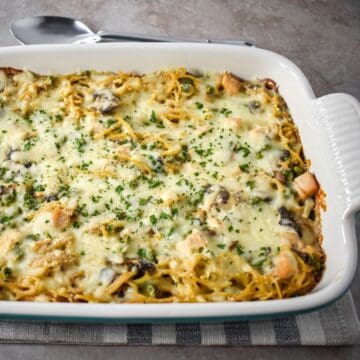
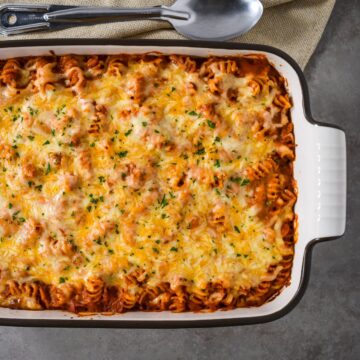
If you enjoyed this skillet lasagna, try some of our other pasta dinners that are easy to make and great for feeding a crowd. Start with a classic baked ziti, then try this vodka sauce pasta bake, which takes a restaurant favorite and turns it into a cozy casserole. And for something a little different (and fun), make our pizza pasta bake.
Join Us
Subscribe to our newsletter for new recipes, cooking tips, and kitchen inspiration. Follow us on social media for more recipe ideas.
📖 Recipe
Skillet Lasagna
Ingredients
- 1 tablespoon olive oil or use your favorite as long as it's suitable for sautéing
- 1 pound Italian sausage casings removed and torn into small pieces, or use bulk sausage
- 1 medium onion diced
- 3-4 cloves garlic minced
- 1 teaspoon Italian seasoning
- ¼ teaspoon black pepper
- 1 (24 ounce) jar meatless pasta sauce (use your favorite brand and variety)
- 1 (14.5 ounce) can diced tomatoes undrained
- 2 cups beef broth plus more if needed during cooking
- 8 ounces lasagna noodles broken into 1-2 inch pieces
- 1 zucchini quartered lengthwise and cut into bite-sized pieces (about 1-2 cups)
- Salt to taste
- 1 cup shredded mozzarella cheese
- ½-1 cup ricotta cheese for dotting on top
- Optional garnish: fresh parsley or basil, red pepper flakes, grated Parmesan
Instructions
- Heat the olive oil in a large deep skillet or shallow Dutch oven over medium heat. When the oil is hot but not smoking, add the sausage. Cook for 3-5 minutes, stirring often and breaking up any large pieces, until browned.
- Add the diced onion to the sausage. Cook for 2 minutes, stirring frequently.
- Add the garlic, Italian seasoning, and black pepper. Cook for 1 minute, stirring frequently, until fragrant.
- Stir in the pasta sauce, undrained diced tomatoes, and 2 cups beef broth. Bring to a gentle simmer. Lower the heat to medium-low, cover, and cook for 5-7 minutes to let the flavors come together. Keep it at a simmer (adjust heat as needed) and stir occasionally.
- Add the broken lasagna noodles. Stir well to coat, then press them down so they're as submerged in the sauce as possible.
- Bring back to a gentle simmer, then lower the heat to medium-low, cover, and cook for 18-23 minutes (depending on how tender you like your noodles). Stir often (every few minutes is not excessive here) to prevent sticking, especially around the edges and bottom.
- Check the noodles around 15 minutes to gauge remaining time (they will cook a bit more once the zucchini is added). As the sauce thickens and the noodles absorb liquid, stir more frequently to keep anything from sticking.
- Stir in the zucchini, cover, and cook for 5-10 minutes, or until the zucchini reaches your desired doneness. Keep the mixture at a simmer and stir as needed. (Cook uncovered if you need to thicken the sauce further.)
- Taste and add salt if needed. Keep in mind that the mozzarella cheese and ricotta both contain salt. As a reference, we added a pinch to ours.
- Dot the top with ricotta (spoonfuls scattered across the surface) and sprinkle the mozzarella over everything. Cover, reduce heat to low, and let it sit for 3-6 minutes, or until the cheese is melted.
- Garnish with fresh herbs and serve with grated Parmesan and a little red pepper flakes on the side, if desired.
Notes
- Lasagna noodles: Use regular lasagna noodles, not no-boil. No-boil noodles tend to cook too quickly and can turn gummy in this skillet method.
- Skillet size: Use a large deep skillet or shallow Dutch oven with a tight-fitting lid. If your pan is too small, the noodles may not stay submerged, and you'll also need room for stirring. We used an 11-inch chicken fryer (a type of deep, large skillet).
- Adjust consistency: Add a splash more broth if it gets too thick or dry too early. If it's too thin toward the end, uncover and simmer a few minutes longer, stirring frequently.
- Use reduced sodium ingredients (like broth, canned tomatoes, and pasta sauce) if you are sensitive to salt.
Nutrition
The nutritional information above is computer generated and is only an estimate. There is no guarantee that it is accurate. This data is provided as a courtesy for informational purposes only.

Leave a Reply